







The Great Lakes and State Waters Bill of Rights for the state of New York
What does it mean to have a right? Not a privilege. Not a permit. An absolute right.
We throw the word ‘right’ around constantly in this country. The right to bear arms. The right to free speech. The right to due process. We have built entire legal institutions around the protection of those rights. But something we never talk about—something so fundamental that it shouldn’t even require a conversation or an opinion, yet here we are—is the right to not be poisoned.
If I asked you the question: does anyone have a right to poison us without repercussions or consequences? Odds are, you would tell me no. No one has the right to willingly poison us without severe consequences. Not a corporation, not an industrial farm, not a 72-year-old pipeline running through the largest surface freshwater system in the world, not our politicians, not anyone.
But the sad reality is, that right does not exist in American law today. Not for you. Not for your children. Not for the Great Lakes Basin region, or their watersheds. And certainly not for the water itself.
That is exactly what New York State Assemblyman Patrick Burke set out to change.
In episode three of the Rights of the Lakes series, I sat down again with Tish O’Dell and Ben Price, Community Rights Pioneers with the Community Environmental Legal Defense Fund (CELDF), to talk about actual legislation now moving through a Great Lakes Basin state. Assembly Bill A05156—the Great Lakes and State Waters Bill of Rights—has been introduced into the New York State Assembly. It is the most significant Rights of Nature legislation in the Great Lakes Basin to date. And most people have never heard of it.
How This Bill Came to Be
The story behind this bill is different from anything CELDF has been part of in their thirty-year history.
It did not start with a community organizing campaign or by CELDF reaching out to a community or legislator. It started with a Buffalo-area assemblyman watching the news.
In 2018 and 2019, while Toledo residents were gathering signatures to put the Lake Erie Bill of Rights (LEBOR) on the ballot, Representative Burke was paying attention. He took the language from LEBOR, adapted it for New York and introduced his own version into the state legislature. He did this without ever contacting CELDF.
Tish O’Dell found out after the fact when CELDF came across an article about it. And when LEBOR was subsequently overturned by a federal court in 2020, Burke reached out to CELDF directly. O’Dell told him plainly, “you do know the Lake Erie bill just got struck down by a federal court?” His reply said everything: yes, and that is exactly why he thought it important to reintroduce the legislation.
His opinion also evolved from his first draft. Protecting Lake Erie alone was not enough. All the Great Lakes are interconnected, and they all need to be protected. And after consulting with others, it was decided that all of the waters of the state of New York should also be protected. So together, CELDF and Burke drafted the Great Lakes and State Waters Bill of Rights. He introduced it, and the movement to defend and protect the Great Lakes and their watersheds was born.
What the Bill Actually Says
Ben Price read directly from the bill’s preamble during our conversation, and I want you to sit with it for a moment.
The bill opens with a declaration: no person, institution, or nation has the right to participate in activities that contribute to the irreversible destruction of Earth’s bio-geochemical cycles, or that undermine the genetic and species diversity and ecological functioning of the planet—the consequences of which would fall on future generations as an irrevocable form of remote tyranny.
Remote tyranny. That phrase should stop you cold, it did me. Because that is exactly what is happening. Decisions are being made right now—by corporations, by regulators, by politicians that you trusted and elected—that will determine what kind of water, air, and land your children and grandchildren inherit. You have no real vote in those decisions and neither do they. And under our current legal system, neither do the ecosystems themselves.
The bill enumerates four specific rights: The Great Lakes ecosystem shall possess the right to exist, persist, flourish, naturally evolve, regenerate, and be restored. The people and natural environment shall possess the right to a clean and healthy environment. Both people and the ecosystem shall possess the right to freedom from toxic trespass—meaning the right not to be poisoned. And the Great Lakes shall possess the right to freedom from monetization, which means that it cannot be owned, privatized, or sold. That prohibition on monetization explicitly includes carbon trading, natural asset companies, ecosystem services contracts, and the patenting of life forms. All basic common sense legislation, but legislation that those who exploit, hate.
This is not vague language. This is a declaration that the Great Lakes are not for sale, and neither is your body.
The Right Not to Be Poisoned
Ben Price put it plainly: toxic trespass simply means poisoning. The bill establishes a fundamental and inalienable right not to be poisoned.
Read that again.
We do not have that right under current U.S. law.
What we have is a regulatory system that grants corporations the right to poison us.
This is done through states issuing permits to pollute within “acceptable” thresholds. The thresholds are set by agencies funded, in part, by the very industries being regulated. And when those thresholds are violated—when an “accident” happens, when a pipeline leaks, when an industrial farm floods a watershed with runoff and algal blooms blossom—the penalty is usually a fine so small it is simply a cost of doing business. Then rinse and repeat.
This is what we are calling environmental protection in 2026. And we wonder why we find ourselves in the existential crisis that we do in 2026—on the verge of a global ecological collapse. This is the system we are relying on to defend the Great Lakes Basin region?
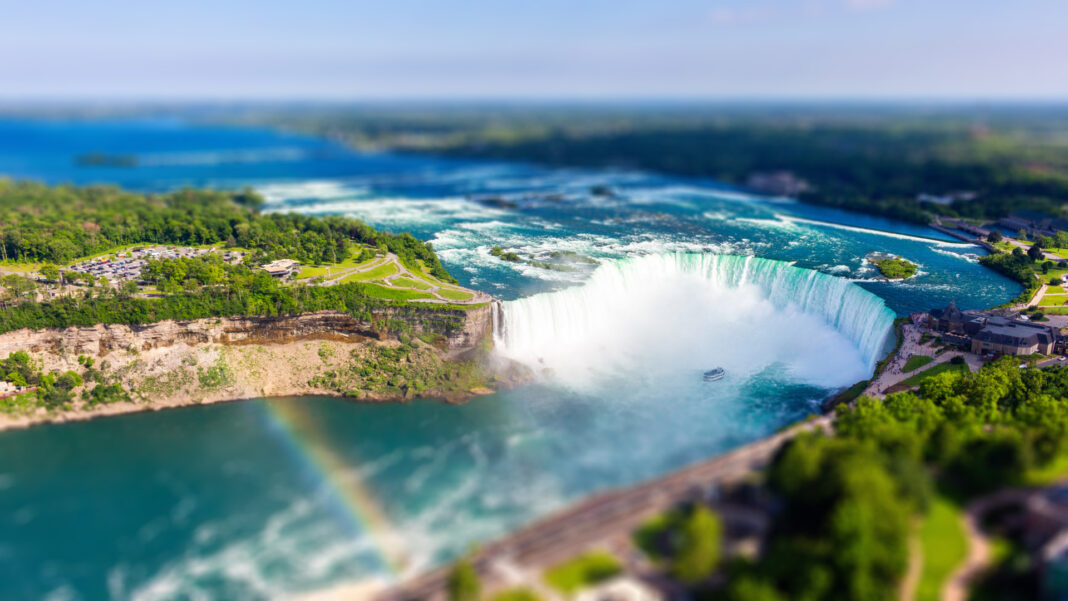
As we covered in Episode 1 of this series, the Great Lakes hold 21 percent of the world’s fresh surface water. Forty million people depend on them for drinking water. And under the current legal framework, every single one of those people has less legal standing than a corporation with a pollution permit.
The Great Lakes and State Waters Bill of Rights changes that equation. It does not regulate the poisoning. It bans it and gives communities recourse to stop the poisoning that is currently taking place. That is the entire difference between environmental regulation and Rights of Nature law. One manages and regulates destruction and harm. The other refuses to accept it in the first place.
Why New York and Why Now
The Great Lakes and State Waters Bill of Rights is not the first attempt at this kind of legislation in the Basin. LEBOR—the Lake Erie Bill of Rights—was passed by Toledo voters in 2019 with 61 percent approval. It was struck down by a federal judge one year and one day later on the grounds that it was “constitutionally vague” and exceeded municipal power. The court essentially ruled that corporate property rights superseded the community’s right to clean water. Yes, you read that correctly. The judge ruled that the corporation has more right to poison you than you do to clean water.
Burke knew that history. He introduced this bill anyway. Because as O’Dell puts it, you have to keep trying. And I will add, no right ever fought for and won in this country came easily. It came through blood, sweat, tears and perseverance. It took the women’s suffrage movement over 100 years for every women to have the right to vote in this country. Imagine if they had given up. We don’t give up here, either.
The edited New York bill has several important structural differences from LEBOR that were designed specifically to address the vulnerabilities that led to its defeat. It operates at the state level rather than the municipal level. It covers the entire Great Lakes ecosystem and all state waters—not just one Lake. And the rights it enumerates are framed explicitly within the context of self-governance and community sovereignty. Two things that people believe that we already have rights to, but are quickly learning that we do not.
If the bill passes, New York communities would have the legal standing to challenge activities that violate the rights of the Great Lakes ecosystem and state waters—regardless of whether a permit exists. The permit would no longer be a shield.
The Bigger Question
Ben Price offered an analogy during our conversation that I cannot stop thinking about.
He compared the legal transformation required by Rights of Nature to the emancipation of enslaved people. Not as a dramatic comparison for its own sake, but as a structural one. Abolishing the legal ownership of nature—like abolishing the legal ownership of people—requires dismantling an entire legal infrastructure that currently treats a living thing as property. And as Price noted, even after the 13th, 14th, and 15th amendments passed, the Supreme Court worked quickly to water them down. The pushback was powerful. The rights were won and then systematically eroded.
And then consider this: the very Amendment designed to grant full citizenship and equal protection to formerly enslaved people—the 14th Amendment—was hijacked for corporate personhood.
The legal foundation of corporate personhood dates back to 1886, Santa Clara County vs Southern Pacific Railroad. The then court clerk—Bancroft Davis, a past railroad man—recorded the statement in a headnote on the case. These headnotes are editorial summaries, not rulings; thus, they carry no legal authority. Yet, this “record” became the cornerstone of corporate constitutional rights in the United States and cited repeatedly in subsequent cases as though it were settled law. The Supreme Court never actually ruled that corporations were persons. It was simply a margin note by a court clerk. This hijacking of the 14th Amendment has been used for nearly 140 years to grant corporations the same constitutional protections as human beings, while we, the actual humans and the ecosystems that we depend on, get permitted to death.
We should expect the same response with Rights of Nature. Industry will push back. Lobbyists will push back. Courts may push back. Some of the largest environmental organizations in the country are already pushing back, arguing that shifting power away from regulatory agencies and into community-based legal challenges is unworkable.
But here is what Price and O’Dell say to that: if we do not begin, we will stay exactly where we are. And where we are is a slow, permitted, legally sanctioned destruction of the ecosystems and ourselves.
The choice is not between a perfect system and an imperfect one. The choice is between a system that treats the Great Lakes as a resource to be managed into destruction and one that recognizes them as a living ecosystem with the right to exist.
What You Can Do Right Now
This bill is in the New York State Assembly now. Assembly Bill A05156. Look it up. Share it. If you are a New York resident, contact your representatives and tell them you support it. Make social media posts about it. Host community roundtables to discuss it. Buy one of our advocacy shirts and wear it to start conversations.
And if you live in any of the other seven Great Lakes Basin states, start asking out loud: when does our state introduce this legislation? What do I need to do to make that happen? Because New York will not be the last. It will be the first. We are going to put in the work for the rest to follow.
The right not to be poisoned should not be a radical idea. It is the most basic claim any living being can make. The fact that we have to fight for it through legislation tells you everything you need to know about who our current legal system is actually built to serve.
Start having conversations where you are. Bring this to your community. We will work with you to make that happen. Because the Great Lakes Basin region has forty million people in it, and right now, most of them do not know this bill exists or what Rights of Nature is.
That changes today.
If you were moved by this, please support independent media free from corporate influence and fully defending the Great Lakes Basin region. Links below.
Watch Rights of the Lakes Episode 3 below. Episodes 1 and 2 are also available if you are new to this series. Be sure to Subscribe, Like, and Share to help us reach more people.